
How to Study Most Effectively: Science-Backed Tips That Actually Work

Every student wants to know the best way to study. Yet many spend hours reading, highlighting, or cramming—only to forget most of it a week later. The truth is, effective studying isn’t about working harder, but working smarter. By using proven techniques and the right tools, you can save time, reduce stress, and actually remember what you’ve learned.
Here are some of the most effective study strategies backed by science—and how AI tools like Eugenia can make them even more powerful.
Why Traditional Studying Doesn’t Work
If you’ve ever reread a textbook three times but still struggled to recall the material, you’re not alone. Common study habits like passive reading, underlining, or last-minute cramming are not effective. Research shows these methods don’t engage the brain deeply enough, so information quickly fades.
The key to effective studying is active learning—techniques that force your brain to retrieve, connect, and apply knowledge, instead of just recognizing it.

Spaced Repetition: Beating the Forgetting Curve
One of the best ways to study effectively is through spaced repetition. Instead of cramming everything in one night, you review material at increasing intervals: a day later, a few days later, a week later, and so on.
This approach works with your brain’s natural forgetting curve. Each review strengthens memory until the information sticks long-term. Apps and AI tools can automate this process, reminding you of concepts right before you’re about to forget them.
Active Recall: Testing Yourself, Not Just Reading
Highlighting notes might feel productive, but the real magic happens when you test yourself. Active recall is the practice of pulling information out of your brain without looking at the answer. Flashcards, practice questions, and explaining concepts out loud are all forms of active recall.
Studies show this method dramatically improves retention compared to rereading. Even short quizzes after studying can double how much you remember.
Focused Study Sessions: Work With, Not Against, Your Brain
Your brain can’t stay sharp for hours without a break. That’s why long marathon sessions often backfire. Instead, break your study into chunks using techniques like the Pomodoro method: 25 minutes of focus, followed by a 5-minute break.
Short, intense study blocks help you stay concentrated while avoiding burnout. Combine this with eliminating distractions—like silencing your phone or using focus playlists—and you’ll maximize productivity in less time.

Using AI to Study Smarter
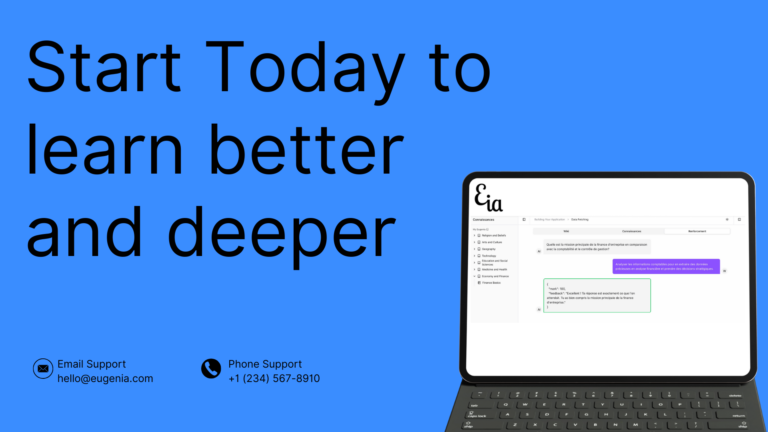
Technology now makes effective study strategies easier to apply. AI tools like Eugenia take your messy notes and:
- Organize them into clear, structured knowledge.
- Use spaced repetition to remind you at the right time.
- Generate quizzes and practice questions for active recall.
- Connect related ideas so you see the “big picture.”
Instead of wasting time figuring out how to study, you can focus on learning. With AI, studying becomes smarter, more personalized, and less stressful.
The Smarter Way to Study
Studying effectively isn’t about spending more hours at your desk—it’s about using proven techniques: spaced repetition, active recall, focused study sessions, and smart organization. Combine these methods with AI support, and you’ll remember more, in less time, with less stress.
👉 Ready to make your studying more effective? Try Eugenia—your AI study partner that transforms notes into lasting knowledge and helps you learn smarter, not harder.