Why We Forget: The Science of Memory and How to Hack It with AI

Forgetting can feel frustrating. You study for hours, only to blank during an exam. You meet someone new, and their name slips away within minutes. It’s not laziness or lack of intelligence—forgetting is part of how our brain works. But what if technology, especially artificial intelligence (AI), could help us remember better?
Let’s explore why memory fails us, and how we can use AI to hack it.
The Science of Forgetting
Our brains are built to forget. In fact, forgetting is a survival mechanism. Imagine if you remembered every detail of every day—you’d be overwhelmed. Instead, your brain filters what it thinks is important and lets the rest fade.
One of the earliest insights into forgetting came from Hermann Ebbinghaus in the 19th century. He discovered the forgetting curve, which shows how quickly we lose information if we don’t actively reinforce it. Within a day, we may forget up to 70% of what we learned unless we review it.
Forgetting isn’t failure—it’s efficiency. Your brain is optimizing space, making sure energy is spent on what seems most useful.

How Memory Works
Memory isn’t like a video recorder. It’s a process that moves through three main stages:
- Encoding: taking in information, like when you read a book.
- Storage: consolidating that information, often during sleep.
- Retrieval: accessing it later when needed.
Problems can happen at any stage. Maybe you didn’t pay enough attention during encoding. Or your brain didn’t store it properly. Or, more commonly, you just can’t retrieve it on demand.
The good news is that memory is flexible. With the right strategies, you can train your brain to hold on to information longer and recall it more easily.
Traditional Memory Hacks
Humans have always tried to outsmart forgetting. Ancient Greeks used the method of loci (a memory palace) to store speeches in their minds. Students rely on flashcards and mnemonics. Teachers encourage summarizing notes or explaining concepts to others.
One of the most effective tools is spaced repetition: reviewing material at increasing intervals over time. This technique works with your brain’s natural forgetting curve, reminding you just before you’re about to forget.
These hacks are powerful, but they require discipline. And let’s be honest—life gets busy. That’s where AI comes in.
Enter AI: Your Digital Memory Partner
AI is changing the way we deal with memory. Tools powered by machine learning can now track how well you know something, predict when you’re likely to forget it, and remind you at the perfect moment.
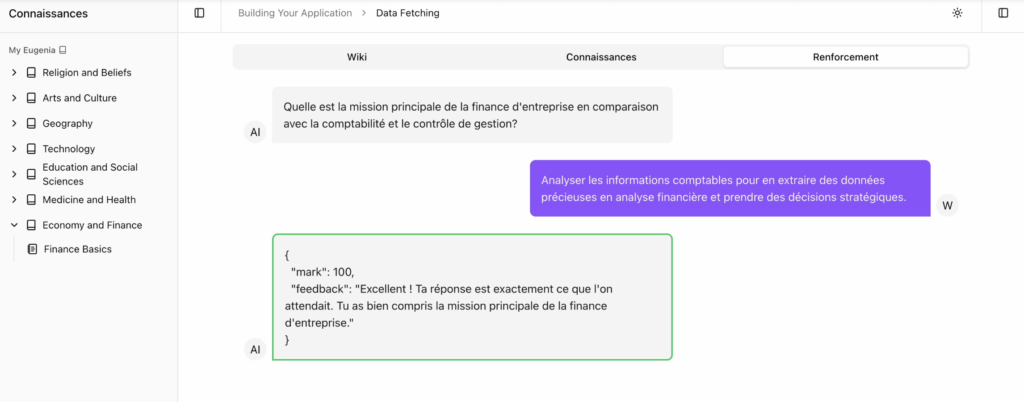
Think of apps like Eugenia newer AI-driven platforms: they use spaced repetition algorithms that adapt to your personal pace. If you struggle with a concept, the system shows it more often. If you master it quickly, it waits longer before showing it again.
But AI goes beyond flashcards. Imagine an AI that not only quizzes you but also summarizes your notes, generates practice questions, or even creates visual maps of complex topics. Instead of relying solely on willpower, you get a personalized memory coach in your pocket.
The Future of Remembering with AI
AI won’t replace the human brain—it will complement it. By taking over the heavy lifting of timing, organizing, and even creating memory aids, it frees your mind for creativity and deeper thinking.
In the future, we may see wearable devices that whisper reminders when you’re about to forget a name, or digital assistants that help you recall everything you’ve ever read or written. Forgetting might never disappear completely (and maybe it shouldn’t), but we’ll have more control over what stays.
We forget because our brains are designed to forget. It’s natural, it’s efficient, but sometimes it gets in the way of learning or daily life. With science, we’ve learned how memory works and how to strengthen it. With AI, we now have powerful tools to make remembering easier, smarter, and even fun.
The next time you catch yourself forgetting, don’t beat yourself up. Instead, think of it as a chance to work with your brain—and maybe let AI give you a little boost along the way.